A successful outdoor living space doesn’t start with the surface materials—it starts beneath them. Whether a homeowner is planning a simple backyard upgrade or a full-scale patio transformation, the groundwork determines how well the final result performs over time. Many issues that appear in finished hardscape projects—uneven surfaces, drainage problems, or shifting stones—can often be traced back to what happened before anything was installed.
This article breaks down the essential early stages of a paver project, focusing on what happens before any visible construction begins. By understanding how preparation, grading, material selection, and structural support work together, homeowners can make better decisions and avoid costly mistakes. Each phase plays a role in ensuring the finished space is durable, level, and visually appealing.
Evaluating the Site and Planning the Layout

Working with a local landscaper business early in the process helps ensure the project is designed with real-world conditions in mind rather than just aesthetics. Every property has unique challenges, such as slope, soil type, drainage patterns, and existing landscaping features, that must be considered before any work begins.
For residential pavers projects, layout planning is especially important because even small miscalculations can affect symmetry, water flow, and long-term durability. A thoughtful design phase ensures the final space functions as well as it looks.
Key steps in the planning stage include:
- Assessing natural water runoff and identifying low spots
- Measuring elevation changes across the yard
- Determining how the space connects to the home and other outdoor areas
- Marking utility lines before any digging begins
- Establishing the intended use of the space (dining, seating, pathways, etc.)
A well-planned layout reduces surprises during construction and minimizes costly adjustments later. It also helps ensure that the installation process moves efficiently from one phase to the next.
Coordinating Materials and Preparing for Construction
Before ground is broken, coordination with a landscape supplier ensures that all necessary materials are available and meet project specifications. Delays in material delivery can stall progress and create inefficiencies on-site, especially during excavation when timing matters most.
At the same time, a lawn and landscaping company often plays a role in protecting existing turf, irrigation systems, and surrounding garden features. Proper staging of materials and equipment helps keep the job site organized and minimizes disruption to the property.
Important preparation steps include:
- Ordering aggregates, edging materials, and base components in advance
- Confirming delivery timelines align with excavation scheduling
- Setting aside staging areas for materials away from active work zones
- Protecting grass and plantings with temporary barriers or coverings
- Coordinating access routes for heavy equipment
When materials are properly coordinated ahead of time, the project moves more smoothly and avoids downtime between phases.
Breaking Ground and Establishing the Work Area
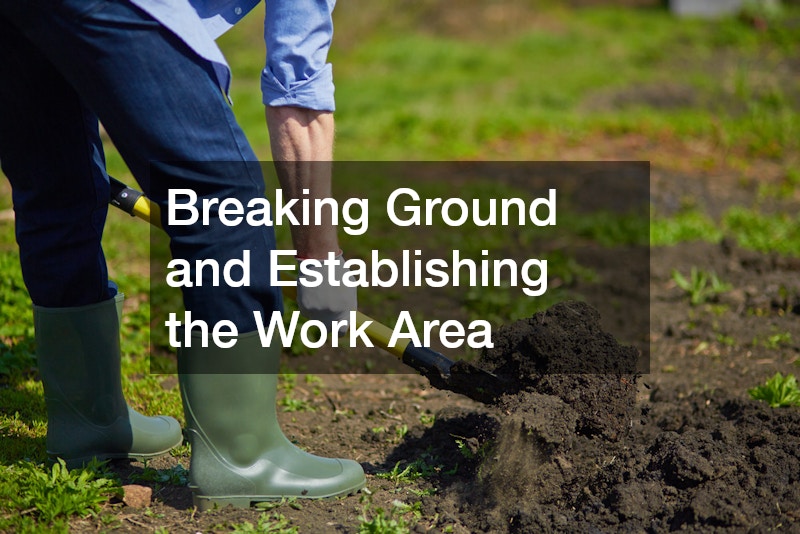
The excavation phase is where the transformation truly begins. This stage involves removing soil, debris, and any existing surface materials to create space for the new structure. Precision is critical because the depth and shape of the excavation directly impact the stability of everything built on top.
For patio installation projects, excavation must account for multiple layers, including base material, bedding layers, and final surface height. If this step is rushed or inaccurate, the entire installation can suffer from settling or shifting over time.
Key excavation practices include:
- Removing topsoil to reach stable subgrade soil
- Adjusting depth based on final surface elevation plans
- Using machinery like skid steers or mini excavators for accuracy
- Compacting subgrade soil before adding any additional layers
- Verifying slope direction for proper drainage
Proper excavation ensures that the foundation of the project is stable and ready for the next construction stages.
Building a Strong Foundation Layer
Once excavation is complete, attention shifts to creating a stable base that will support the surface materials. The performance of pavers depends heavily on what lies beneath them, making this one of the most important stages of the entire process.
A properly constructed paver base helps distribute weight evenly, prevents shifting, and improves resistance to weather changes. Without it, even high-quality materials can fail prematurely.
Essential elements of base preparation include:
- Adding compactable gravel in controlled layers
- Compacting each layer thoroughly before adding the next
- Ensuring consistent depth across the entire surface
- Checking slope for water drainage efficiency
- Avoiding organic materials that can decompose over time
A properly installed base is what allows the surface to remain level and stable for years.
Managing Structural Support and Soil Stability
In some projects, elevation changes or soil movement require additional structural reinforcement. This is where a retaining wall contractor becomes essential. These professionals design and build structures that hold soil in place while also enhancing the overall landscape design.
Retaining walls are especially important on sloped properties where soil erosion or shifting could compromise the integrity of the project. Beyond functionality, they can also add visual depth and usable space to a yard.
Key considerations for structural support include:
- Evaluating slope severity and soil composition
- Determining wall height and load requirements
- Incorporating drainage systems behind the structure
- Selecting durable materials suited for long-term pressure
- Integrating the wall into the overall landscape design
Properly built retaining walls help ensure that surrounding hardscape features remain stable and protected from soil movement.
Final Grading and Preparing the Installation Surface
After structural and base work is complete, the surface must be finely graded to ensure accuracy before installation begins. This step is critical for achieving a smooth, level finish and ensuring that water drains correctly away from structures.
During this phase, residential pavers are not yet installed, but the surface is carefully shaped to match the design plan. Even small grading errors can lead to visible inconsistencies once installation is complete.
Key grading tasks include:
- Smoothing and leveling the compacted base layer
- Fine-tuning slopes for proper drainage direction
- Checking consistency across the entire project area
- Removing any remaining debris or irregularities
- Performing final compaction passes for stability
A properly graded surface ensures that the final installation fits precisely and performs as expected.
Avoiding Common Planning and Material Errors

Mistakes in the early stages of a project can lead to long-term issues that are expensive to fix. Working with a landscape supplier helps reduce the risk of receiving incorrect or poor-quality materials, while proper excavation practices ensure the site is ready for construction.
Common issues include:
- Using inconsistent aggregate sizes that affect compaction
- Underestimating excavation depth requirements
- Failing to account for drainage flow paths
- Skipping proper soil compaction before layering materials
- Receiving delayed or incorrect material shipments
To avoid these problems, homeowners and contractors should:
- Confirm all material specifications before ordering
- Inspect materials upon delivery
- Follow a detailed excavation plan rather than improvising on-site
- Test compaction at multiple stages
- Maintain clear communication between suppliers and crews
Attention to detail during these early steps prevents costly corrections later.
Coordinating Multiple Teams for a Seamless Process
Large outdoor projects often involve multiple professionals working together, and the success of the job depends heavily on how well these moving parts stay aligned. A local landscaper business typically acts as the central point of coordination, managing scheduling, sequencing of work, and overall project flow from start to finish. This role is especially important when excavation, grading, and installation all need to happen in a precise order. Without clear leadership, one delayed step can create a ripple effect that impacts every phase that follows.
At the same time, a lawn and landscaping company often plays a supporting but equally important role in maintaining the property throughout construction. This includes protecting grass, irrigation systems, garden beds, and hard-to-replace landscape features from heavy equipment and foot traffic. They may also handle ongoing cleanup so the site remains safe and organized, which reduces hazards and keeps work areas accessible for crews.
Strong coordination ensures that excavation, grading, and installation phases transition smoothly without delays or confusion. When each team understands not only their own responsibilities but also how their work affects others, the entire project becomes more efficient. For example, excavation crews need to finish specific sections before grading teams can begin fine-tuning slopes, and installation crews rely on both to complete their work accurately. Any breakdown in timing can lead to rework, wasted materials, or inconsistent results.
Best practices for team coordination include:
- Establishing a clear project timeline before work begins, including milestones for excavation, base preparation, and installation. This helps all teams understand when they are expected to start and finish their tasks, reducing downtime and preventing overlap that can damage completed work.
- Assigning responsibilities to each crew or contractor so there is no confusion about who handles specific tasks. Clearly defined roles help prevent duplication of effort and ensure accountability at every stage of the project.
- Maintaining daily progress updates to keep everyone informed about what has been completed and what is scheduled next. These updates help identify potential delays early and allow teams to adjust their workflow before small issues become larger problems.
- Ensuring equipment and materials are available when needed prevents unnecessary pauses in construction. Proper planning for deliveries, machinery usage, and staging areas helps crews stay productive and avoid waiting on critical resources.
- Protecting existing landscape features throughout construction by using barriers, protective coverings, or temporary rerouting of equipment traffic. This step helps preserve parts of the property that are not being modified while still allowing work to proceed efficiently in active zones.
When teams communicate effectively and stay aligned throughout the process, the project moves faster and with fewer disruptions to the property. Good coordination not only improves efficiency but also enhances the overall quality of the finished result, since each phase is completed with a clear understanding of how it supports the next.
Transitioning from Base Work to Finished Surface
As the project nears completion, the focus shifts from preparation to installation. At this stage, all of the earlier work—grading, compaction, and base building—comes together to support the final surface layer. Because the foundation has already been carefully constructed, the installation phase is less about correcting issues and more about executing the design with precision. This is where the project begins to look finished, but every decision made earlier still plays a critical role in how the surface performs over time.
A properly prepared base ensures that the installation process can proceed smoothly without unexpected settling or shifting. It also allows installers to focus on accuracy, knowing the underlying structure is stable and capable of supporting long-term weight distribution. When the foundation is uneven or poorly compacted, problems tend to appear immediately during installation, making it difficult to achieve clean lines and consistent height. In contrast, a solid base makes it possible to achieve tight joints, smooth transitions, and a visually cohesive surface.
Proper installation over a well-built foundation reduces the risk of shifting, sinking, or uneven surfaces. It also improves resistance to seasonal changes such as freeze-thaw cycles, which can otherwise cause movement if the underlying support is weak. With a stable base in place, the surface materials interlock more effectively and maintain their alignment even under regular foot traffic, furniture loads, and environmental stress.
The installation process typically includes:
- Laying materials in the planned pattern, ensuring the design matches the original layout and flows naturally with surrounding spaces. Installers often work from fixed edges or reference lines to maintain consistency across the entire surface. This step requires attention to detail because even small deviations can become noticeable once the area is fully completed.
- Maintaining consistent spacing and alignment to create uniform joints between each unit. This not only improves appearance but also ensures that the jointing material can properly lock the surface together. Spacing irregularities can lead to weak points where movement or shifting may occur over time.
- Cutting-edge pieces for a precise fit around borders, corners, and transitions. These cuts must be accurate so that the installation integrates seamlessly with existing structures such as walkways, steps, or edging restraints. Clean cuts also help maintain structural integrity by preventing unnecessary gaps or pressure points.
- Compacting the surface to lock everything in place, which helps seat the materials firmly into the bedding layer. This step ensures that each unit is fully supported from below and reduces the likelihood of future movement. Mechanical compaction is often done in multiple passes to ensure even stabilization across the entire surface.
- Adding finishing sand to stabilize joints, filling the gaps between installed units to enhance interlock, and reducing shifting. This material helps distribute load and prevents debris from entering spaces between surfaces, which can weaken the structure over time. It is often swept and compacted into place until joints are fully filled and secure.
Throughout this stage, the quality of earlier excavation and base preparation becomes clearly visible in the final result. A well-prepared foundation allows for clean installation lines, consistent leveling, and a finished surface that feels solid underfoot. Conversely, any weaknesses in the groundwork tend to reveal themselves quickly, reinforcing just how important the preparation phase is to the overall success of the project.
Conclusion
Every successful outdoor hardscape project depends on what happens before the first visible layer is installed. From planning and material coordination to excavation and structural support, each step builds the foundation for a durable and visually appealing space.
When preparation is handled carefully and professionally, the final result is not only attractive but also built to withstand years of use and environmental changes. Homeowners who understand the importance of early-stage work are better equipped to make informed decisions and achieve long-lasting results in their outdoor living spaces.