
When homeowners think about improving the visual appeal of their property, they often jump straight to cosmetic fixes. They envision new porch furniture, seasonal flower arrangements, or decorative lighting fixtures. While these finishing touches add charm, they act merely as a bandage if the underlying bones of the property are deteriorating. True curb appeal is built from the foundation upward. It relies entirely on structural maintenance—the practice of preserving, repairing, and upgrading the fundamental elements that protect and frame your house.
Neglecting these core components creates an aesthetic deficit that no amount of superficial styling can mask. A beautifully styled front porch cannot distract from a sagging roofline, rotted siding, or a leaning perimeter barrier. Furthermore, structural maintenance is a dual-purpose investment; it simultaneously preserves the market value of your asset while establishing a clean, intentional, and high-end visual presence. By treating your property as a series of interconnected systems, you can implement a long-term care strategy that yields exceptional lasting beauty. This comprehensive guide breaks down the essential structural zones of your property, offering actionable steps to transition your home exterior from merely managed to truly magnificent.
Assessing and Reverting Common Enclosure Failures
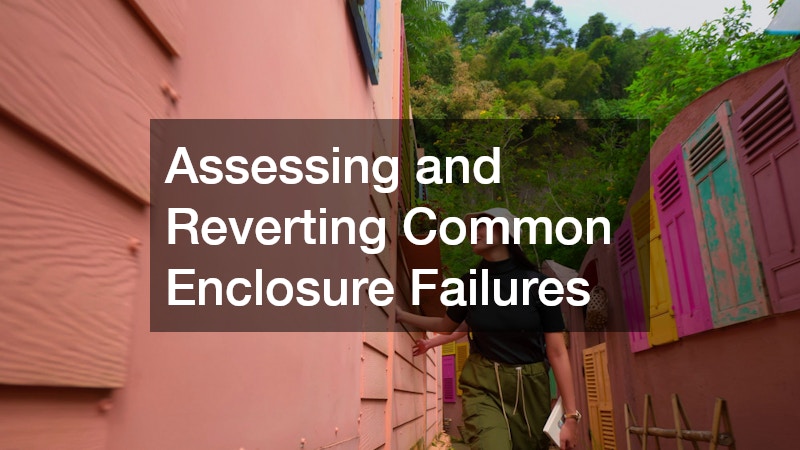
The vertical cladding of your home serves as its primary visual skin. When this skin begins to fail, the aesthetic impact is immediate and severe. Homeowners must routinely inspect their exterior walls for subtle signs of distress.
- Locate warped or buckled panels that indicate internal shifting or improper original fastening.
- Identify failing window and door flashing, which permits water to breach the barrier, leading to hidden rot and external mold staining.
- Examine joints and seams for gaps where caulking has shrunk, split, or fallen away completely.
When these vulnerabilities are found, patches are rarely a permanent solution. Upgrading to modern, weather-resistant materials like fiber cement or engineered wood can completely redefine your home’s architectural profile. These modern options provide deep shadow lines and authentic textures that mimic traditional wood without the susceptibility to rot. To achieve this level of precision, partnering with a certified siding contractor is essential. These specialists ensure that the underlying moisture barriers are flawlessly integrated, flashing is perfectly lapped, and every course of cladding is perfectly level, resulting in a sleek, structurally sound exterior.
Extending Overhead Protection to Modernize Your Roofline
Your roof represents a massive percentage of your home’s visible surface area. A stained, damaged, or aging roof completely flattens the visual dimensions of an otherwise beautiful house.
- Scan the roof plane for missing, cracked, or curling shingles that break up the uniform texture.
- Look for dark, unsightly streaks of gloeocapsa magma—a hardy algae that feeds on the limestone filler in asphalt shingles.
- Check the horizontal alignment of your gutters; sagging or pulling lines indicate structural fastening failures that cause water to spill over and stain your fascia boards.
Addressing these issues goes far beyond basic leak prevention. When it comes time to replace the surface, moving from standard three-tab shingles to dimensional architectural shingles adds immediate texture, weight, and premium contrast to your roofline. Engaging a skilled roofing contractor allows you to safely correct structural roof deck sagging, install proper ridge ventilation systems that prevent future shingle degradation, and select a color palette that elegantly grounds the rest of your home’s exterior features.
Stabilizing Perimeter Barriers for a Clean Framework
Property boundaries establish the initial impression of your home from the street. A perimeter barrier that is structurally compromised acts as an immediate visual detractor, signaling neglect to anyone passing by.
- Inspect the baseline of your boundaries for leaning posts caused by soil erosion, frost heave, or inadequate concrete footings.
- Check for missing pickets, cracked rails, or loose hardware that causes gates to sag and drag against the ground.
- Look closely at the ground-clearance zone for signs of structural rot or insect damage in wooden barriers.
Correcting these alignment issues restores a sense of order and geometry to your property. If the existing barrier is past its structural prime, replacing it with modern clean lines—such as horizontal cedar slats or minimalist matte black aluminum panels—can dramatically modernize your land frame. Utilizing a professional fence installation team guarantees that your new boundary follows the exact contour of your terrain while maintaining a perfectly level top margin. This structural precision frames your yard beautifully, behaving like a gallery frame around a piece of art.
Managing Canopy Health to Protect and Frame Your Home
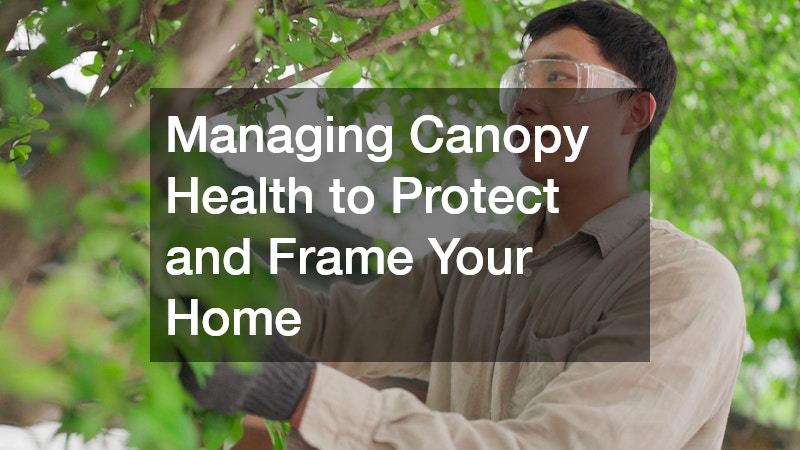
The mature trees on your property provide irreplaceable scale, shade, and organic texture. However, without intentional structural pruning, they can quickly turn from asset to liability, obscuring your home’s best features and threatening its physical safety.
- Identify dead, dying, or diseased branches that pose an immediate falling hazard to your living spaces.
- Locate overextended limbs that brush against siding, lift roof shingles, or completely block out natural sunlight.
- Evaluate the interior canopy for dense, tangled growth that prevents wind from passing through safely, increasing the risk of storm uprooting.
A strategic approach to canopy management involves directional pruning to create visual corridors. By clearing away low-hanging clutter and thinning out dense interiors, you can “window” your home, allowing its unique architectural details to be viewed clearly from the street while letting sunlight reach your foundation beds. Relying on a professional tree service ensures that these massive living structures are cut safely, using industry-approved techniques that promote rapid healing and prevent the introduction of wood-boring pests.
Revitalizing Cracked, Spalling Walking Paths
Driveways and front walkways are heavy-use structural elements that double as critical visual runways leading to your home. When these surfaces succumb to the elements, they degrade the presentation of the entire landscape.
- Track the progression of deep structural cracks caused by sub-grade shifting or tree root intrusion.
- Look for spalling, which is the pitting, chipping, or flaking of the concrete surface layer, often exacerbated by freeze-thaw cycles and chemical de-icers.
- Assess individual slabs for uneven settling, which creates dangerous trip hazards and collects pools of dirty standing water.
Instead of relying on messy rubberized crack fillers that resemble dark scars across your pathways, a total structural restoration is preferred. Modern overlay applications can completely transform tired grey paths into elegant entryways. By applying a polymer-modified overlay, you can introduce stamped stone textures, slate patterns, or contemporary broom finishes directly over the existing slab. Seeking out professional concrete resurfacing stabilizes the underlying foundation while providing a durable, high-density wear layer that looks brand new and resists future color fading and weather damage.
Optimizing Turf Density to Create a Natural Backdrop
A pristine lawn is not just a gardening achievement; it is the living canvas upon which all your home’s structural elements sit. If the soil beneath your grass is structurally compromised, your turf will remain thin, yellow, and prone to weed infestations regardless of how much water you apply.
- Test for compacted soil by attempting to push a screwdriver easily into the dirt; high resistance means roots cannot access oxygen or nutrients.
- Identify low spots where poor grading causes water to pool, suffocating grass roots and creating muddy bald spots.
- Look for heavy thatch buildup—a dense layer of living and dead organic matter between the green vegetation and the soil surface that blocks moisture penetration.
Overcoming these ground-level failures requires structural intervention. Core aeration pulls plugs of dirt out of the earth, allowing the ground to breathe and expand. Following this with a top-dressing of organic matter helps level out minor grading dips naturally. Integrating these heavy-duty practices into your annual lawn maintenance regimen builds a deep, resilient root system, producing a thick, uniform green carpet that highlights your hardscapes and finishes the look of your exterior.
Structuring Elevated Outdoor Rooms for Longevity
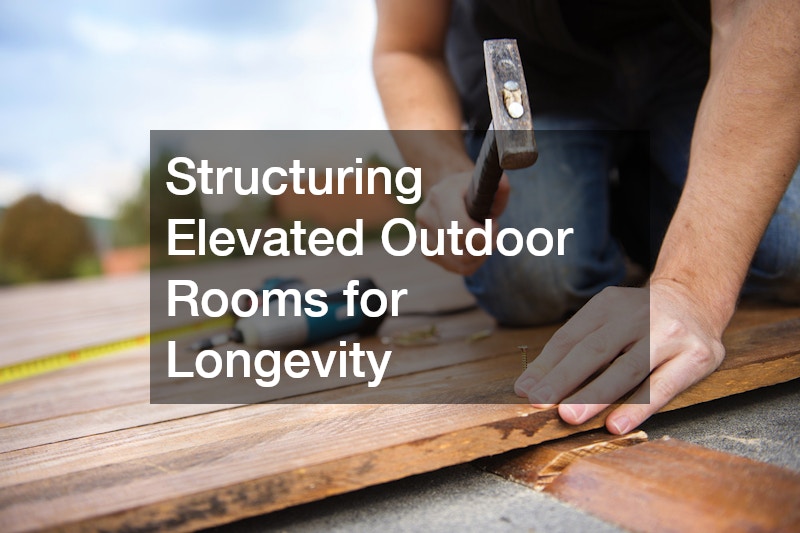
Decks serve as excellent transition zones between the comfort of your interior and the open air of your yard. Because these platforms are elevated and exposed to continuous foot traffic and weather, their structural health is critical for both safety and style.
- Examine the ledger board—the critical connection point where the deck meets the house—for proper flashing and secure bolts.
- Check support posts for signs of ground-line rot or shifting away from their concrete piers.
- Inspect individual joists for splitting, bowing, or soft spots that indicate advanced water retention.
When a deck’s structural frame is verified or rebuilt, the upper layout can be designed to match the natural geometry of your home. Incorporating multi-level transitions, built-in perimeter seating, and hidden fastening systems transforms an ordinary platform into a sophisticated architectural feature. Working side-by-side with experienced deck designers allows you to select advanced composite materials that will never warp, splinter, or require tedious staining, ensuring your outdoor living room retains its sharp, clean profile for decades.
Integrating Heavy Structural Elements into the Landscape
Retaining walls, stone pathways, and permanent garden borders add vital structural weight and dimension to a flat yard. They control soil movement, manage slopes, and partition your landscape into distinct, usable rooms.
- Monitor retaining walls for bowing, leaning, or tilting outward, which points to a catastrophic failure of internal drainage and earth ties.
- Watch for shifting or sinking paving stones along heavily trafficked garden paths.
- Look for signs of soil erosion washing over your hardscape borders during heavy downpours.
Building these features correctly requires deep excavation, aggregate sub-bases, and careful consideration of hydrostatic pressure. When a retaining wall is engineered with proper gravel backfill and weep holes, it can easily support tiered garden beds that add stunning vertical visual interest to your property. Entrusting these projects to specialists in hardscape installations guarantees that your stone features are backed by the drainage networks necessary to keep them perfectly aligned and beautiful through every changing season.
Correcting Masonry Shifting in Entertainment Spaces
Patios are the foundation of outdoor hospitality. Because they sit directly on the earth, their continuous beauty depends entirely on the stability of the ground preparation beneath them.
- Identify crumbling mortar joints between natural flagstones or brick pavers.
- Address individual stones that have rocked loose or sunk, creating uneven surfaces for outdoor furniture.
- Correct poor perimeter pitch that allows rainfall to run back toward your home’s foundation rather than out into the yard.
Restoring an entertainment surface involves clearing away failed joint sand, resetting shifted blocks, and locking them down with modern polymeric sand that resists weed growth and washouts. Expanding your patio layout with features like integrated seat walls or custom outdoor kitchen islands creates an undeniable resort-like atmosphere. Consulting with local patio contractors ensures that your outdoor entertaining footprint is engineered to handle your regional climate’s freeze-thaw cycles without shifting out of true.
Protecting Extruded Wood and Masonry with High-Grade Sealants
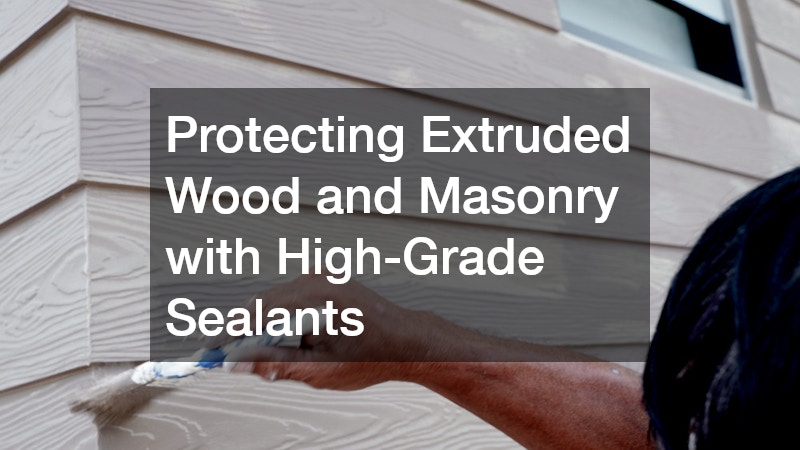
The finest architectural details on your home—the custom window trim, the decorative crown molding, the fascia boards, and architectural columns—are often the most vulnerable to the elements. Once the paint or stain coating fails, these elements degrade rapidly.
- Look for chalking, peeling, or bubbling paint that indicates moisture is trapped beneath the film.
- Check corner joints on wooden trim for signs of separation where water can enter.
- Examine exposed wood surfaces for fine checking or hairline cracks that signal deep dehydration of the grain.
True protection requires an exhaustive preparation sequence that goes far beyond simply brushing on a fresh coat of color. Scraping away old layers, sanding the substrate smooth, filling checks with exterior wood patch, and sealing every seam with high-flexibility caulking creates a pristine base. Utilizing the expertise of exterior painting contractors guarantees that these delicate accent areas receive the correct primers and durable satin or semi-gloss topcoats. This professional execution results in crisp, razor-sharp color transitions that make your home’s unique architectural lines pop dramatically against the primary siding color.
The pursuit of an exceptional home exterior is a journey that must prioritize structural maintenance over temporary cosmetic adjustments. By systematically addressing the integrity of your protective envelope, stabilizing your perimeter boundaries, optimizing your soil and turf health, and engineering your heavy hardscapes for proper drainage, you construct a foundation of beauty that endures. These integrated maintenance practices protect your long-term real estate value while creating a striking, polished aesthetic that commands respect from every angle. When you invest in the physical health of your property, true curb appeal follows naturally, transforming your home into a beautiful landmark within your neighborhood.