
A neglected backyard often becomes a chaotic mix of patchy turf, overgrown shrubs, and cracked walkways. Yet, an outdoor area is versatile and valuable. Transforming such a yard into a balanced environment requires moving from impulsive patches to a systematic overhaul. With patience and foresight, property revitalization yields lifestyle and economic rewards. A well-designed landscape extends indoor spaces, offering settings for gatherings, relaxation, recreation, and culinary enjoyment. Exterior improvements boost neighborhood standing and resale value. Buyers are drawn to homes with cohesive outdoor architecture and healthy plant life. Achieving this requires a sequence of stages. Planting flower beds before fixing grading or drainage issues wastes resources. Transformation begins by removing liabilities, nourishing the soil, installing stone masonry, establishing borders, and creating living zones. Tackling the project phase by phase enables homeowners to rebuild their yard into a stunning retreat.
Assessing the Property Canvas and Clearing Environmental Hazards

Every successful yard renovation starts with an unsparing assessment of existing conditions. Before reviewing nursery plant varieties or planning outdoor kitchens, spend several weeks observing your land across different weather cycles and hours of daylight. Note how direct sunlight moves across the yard, where rainwater ponds during heavy deluges, and where prevailing winds create harsh wind corridors. Identifying structural liabilities early prevents costly damage to newly constructed features later on.
A meticulous visual walkthrough often reveals mature liabilities that compromise safety and landscape aesthetics. Heavy timber can decay from the inside out, extensive roots undermine masonry, and old tree remains attract subterranean pests. Resolving these deep hazards demands specialized equipment and certified trade expertise.
- Audit mature tree health: Inspect hardwoods and conifers for fungal conks, dead crown sections, trunk cavities, and dangerous weight distribution over buildings. Bringing in certified tree services ensures hazardous limbs hanging near roofs, driveways, or overhead utility cables are safely dismantled using crane operations and precision rigging rather than reckless felling.
- Trace invasive root zones: Prominent surface roots will easily lift stone pavers, crack poured slabs, and clog underground drainage channels. Arborists can identify which root branches can be trimmed without harming the specimen, as well as where construction techniques must adapt around critical root zones.
- Remove buried woody debris: Leaving dead stumps in the yard is an open invitation for carpenter ants, wood-boring beetles, and fungal pathogens to spread into nearby gardens. Hiring professional stump grinding services shreds root plates down well below ground level, leaving an even surface ready for grading, healthy aeration, and deep-rooting turf installation.
- Flag hydrological problem spots: Use survey flags to mark areas where standing rainwater persists longer than twenty-four hours after storms. These soggy depressions indicate severely compacted hardpan or poorly graded swales that require subsurface French drainage systems, dry creek beds, or bio-retention rain swales.
Clearing the canvas eliminates structural hazards, opens up sightlines, and provides a clean, predictable footprint for all subsequent construction phases.
Amending Subsurface Soil and Sourcing Climate-Resilient Foliage
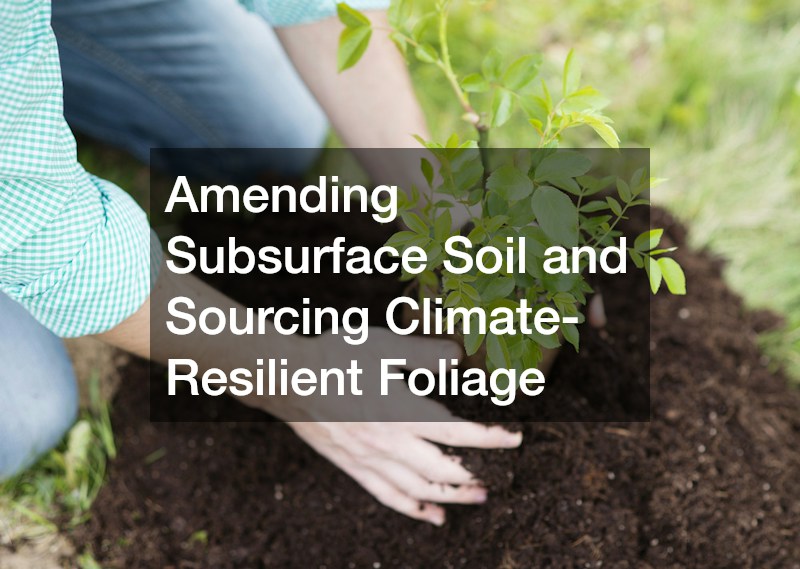
A breathtaking landscape cannot survive on poor dirt. Residential properties frequently feature severely degraded ground stripped of natural organic material by prior building activity or years of chemical neglect. Planting delicate ornamental shrubs, flowering perennials, or premium turfgrass in compacted clay or nutrient-depleted sand is an expensive recipe for root asphyxiation, nutrient deficiency, and chronic weed infestations.
Transforming tired dirt into a thriving biological engine requires structural intervention before laying a single seed or root ball. Start by submitting soil samples to a local agricultural extension office to determine baseline pH, salinity, cation exchange capacity, and primary macronutrient balances. Once you understand the physical and chemical constraints of your subgrade, you can systematically replenish the ground.
- Relieve deep ground compaction: Use mechanical core aerators or subsoil rippers to fracture impervious hardpan layers across all planting and lawn corridors. Breaking open the subgrade allows air, beneficial subterranean microbes, and plant roots to penetrate downwards rather than circling in shallow layers.
- Incorporate high-grade organic loam: Bagged soil amendments from big-box stores are economically impractical and qualitatively insufficient for comprehensive residential restorations. Working directly with established garden topsoil services allows you to order bulk quantities of rich, weed-screened topsoil blended with organic compost, decomposed leaf mulch, and vital minerals to create an optimal six-to-eight-inch root zone.
- Map functional hydrozones: Group companion species together based on their shared moisture and solar requirements. Placing water-demanding hydrangeas near moist downspouts and grouping heat-tolerant ornamental grasses in sun-drenched beds prevents wasteful irrigation and reduces plant loss.
- Source climate-tested cultivars: While glossy plant catalogs feature tempting exotic flora, visiting an independent local garden center provides direct access to horticultural experts who understand local soil profiles, typical frost depths, and microclimates. Regional nurseries offer acclimated native plants and hardy cultivars that effortlessly withstand local pest pressures and summer droughts.
- Plant at proper root flare depths: Excavate planting pits at least twice as wide as the root container, but ensure the depth matches the existing root flare. Setting root crowns slightly above the surrounding grade stops moisture buildup against the stem and fosters vigorous horizontal root development.
Investing upfront in rich soil and well-adapted flora prevents recurring replanting expenses and gives your new beds the vitality needed to flourish.
Engineering Structural Masonry and Hard Surface Circulation
Living foliage and green lawns supply texture and seasonal warmth, but built hardscapes supply the underlying architectural skeleton that makes an outdoor environment functional. Without clear walkways, defined gathering terraces, and secure level platforms, a yard remains a disorganized expanse rather than an inviting series of outdoor living rooms. Navigating elevation changes and orchestrating smooth movement across your grounds demands sound engineering and precise installation.
Unchecked grade shifts represent a major hurdle on many suburban and rural parcels. Sloping ground leads to chronic sheet erosion, strips away valuable topsoil during torrential rains, and renders large sections of the yard impossible to use for casual recreation or outdoor dining.
- Stabilize dynamic slopes with retaining masonry: Retaining walls convert non-functional hillside contours into terraced planting tiers and level outdoor seating spaces. Hiring an experienced hardscaping contractor ensures these massive gravity walls are calculated for active lateral earth pressure, anchored on crushed stone footings, and backed by geotextile fabric and perforated drainage pipes to prevent catastrophic blowouts caused by water buildup.
- Establish clear pedestrian traffic routes: Map logical footpaths that naturally connect rear entry doors, outdoor dining areas, detached sheds, and fire features. Primary walkways should span between forty-eight and sixty inches wide to allow two people to walk comfortably shoulder-to-shoulder, while secondary garden paths can narrow down to thirty inches.
- Construct robust aggregate foundations: The durability and safety of exterior masonry are determined by what sits beneath the surface. Engaging reputable paving contractors guarantees that patios, driveways, and main terraces are excavated to proper structural depths, lined with woven separation geotextiles, and mechanically compacted with dense graded aggregate before stone is laid, preventing future settling, frost heaving, and surface depressions.
- Select resilient and slip-resistant paving units: Specify dense dimensional flagstones, architectural concrete pavers, or rustic clay brick units that complement the architectural style of your home. Ensure paver surfaces carry light texturing for wet slip resistance, and fill tight joint gaps with modern polymeric sand to block weed growth and ant activity.
- Integrate low-voltage path and step illumination: Conceal discreet LED downlights beneath retaining wall caps and directly inside stair risers. This accent lighting highlights architectural stone textures after sunset while preventing trips along dark outdoor paths.
Thoughtfully installed structural masonry creates permanent visual rhythm, linking your indoor living spaces effortlessly to your outdoor grounds.
Establishing Perimeter Privacy and Layering Dynamic Plantings

With hard surfaces and retaining terraces safely locked into position, the next priority is defining the outer boundary envelope. A pristine yard must feel private, sheltered, and separate from neighborhood traffic, municipal roads, and adjacent properties. Solid perimeter borders establish a crucial sense of psychological comfort and privacy while serving as a structural backdrop against which your living plants and flowers can shine.
Boundary selections must successfully balance aesthetic continuity, local municipal zoning ordinances, property line setback requirements, and harsh wind exposure. Well-constructed property borders should look like a deliberate design choice that harmonizes with your house rather than a defensive stockade.
- Install durable perimeter enclosures: Navigating municipal setback laws, pool barrier codes, and wind resistance requirements calls for seasoned trade knowledge. Partnering with skilled fence contractors ensures that property line posts are bored well below regional frost lines, braced properly with structural concrete, and aligned with laser precision. Choosing horizontal composite slats, rich western red cedar, or powder-coated aluminum delivers years of privacy and structural stability without warping or rot.
- Structure plantings through descending vertical tiers: Avoid the monotonous look of flat, single-row hedge lines along your property fence. Design multi-tiered planting beds that step down gradually: place tall evergreen arborvitae or column junipers along fence borders for year-round screening, layer deciduous flowering viburnums or dwarf hydrangeas in the mid-ground, and place mounding hostas, daylilies, or ornamental grasses along the front perimeter.
- Outsource heavy installation to skilled specialists: Handling full-scale site preparation, moving heavy root balls, spreading tens of yards of bark, and laying hundreds of square feet of turf is physically exhausting and technically demanding. Bringing in full-spectrum landscaping services ensures that deep shrub trenches are excavated safely, specimen trees are planted without root girdling, and sod lawns are rolled, cut, and seated smoothly in a fraction of the time DIY attempts would require.
- Blanket bare earth with seasoned organic mulch: Apply a uniform three-inch layer of double-shredded hardwood mulch across all newly prepared garden beds. Keep mulch pulled back four inches from wood fence posts and plant stems to deter rot, while locking moisture around root zones and preventing weed seed germination.
- Install water-conserving micro-irrigation lines: Position automated subterranean drip tubing beneath the mulch layer rather than relying on overhead sprinklers. Direct root watering minimizes evaporative water loss, prevents water staining on boundary panels, and stops fungal foliar diseases from damaging expensive ornamental plants.
Combining crisp architectural boundaries with lush, staggered layers of foliage creates an intimate backyard retreat that feels completely insulated from the outside world.
Designing Multi-Season Living Zones and Preserving Exterior Finishes

The ultimate goal of a comprehensive landscape redesign is to encourage everyday human enjoyment. An outdoor environment should not merely be admired through a living room window; it should function as an accessible, comfortable retreat across varying weather conditions. Expanding your home’s usable footprint requires creating covered, semi-conditioned transitional spaces that protect you from extreme afternoon sun, sudden rain squalls, and nuisance insects.
Transitioning from open outdoor terraces to sheltered leisure areas expands the functionality of your yard well into the shoulder seasons of spring and autumn. The transition between the primary residence and the open garden should feel natural, inviting, and architecturally cohesive.
- Construct sheltered transitional retreats: Incorporating a custom enclosed patio creates a versatile, all-weather sanctuary where family members can dine, work remotely, or unwind surrounded by nature without battling midsummer mosquitoes or chilly autumn winds. Equipping the space with motorized retractable screens, insulated glass panels, and ceiling-mounted radiant heaters ensures comfortable utilization during eight to twelve months of the year.
- Equip outdoor culinary and entertainment hubs: Install durable weather-rated outdoor kitchens featuring stainless steel cabinetry, marine-grade refrigeration, and integrated gas grills. Situate these food prep stations close to your indoor kitchen layout to minimize footsteps when ferrying serving platters and beverages back and forth.
- Implement preventative surface maintenance: Exterior stone, decorative pavers, and composite decking inevitably accumulate atmospheric grime, pollen films, moss, and tannin stains from fallen leaves over the course of wet winters and humid summers. Contracting reliable pressure washing companies for scheduled bi-annual deep cleanings removes slippery organic biofilms, restores the original color vibrancy of hardscapes, and revitalizes perimeter fences without etching stone faces or eroding delicate polymeric sand joints.
- Apply breathable paver and masonry sealers: Protect newly cleaned hard surfaces from oil drips, red wine spills, and damaging ultraviolet sun bleaching by rolling on silane-siloxane penetrating sealers. Breathable sealers block moisture intrusion while allowing vapor trapped beneath slabs to escape freely, preventing efflorescence and surface spalling.
Thoughtfully constructed outdoor living spaces combined with rigorous surface care ensure that your property remains an inviting, sparkling oasis that retains its value and beauty through every seasonal transition.
Rebuilding an overgrown or neglected yard into a pristine residential landscape is a transformative endeavor that permanently enriches daily life. While taking on such an ambitious project requires capital, time, and coordinated physical effort, the long-term payoff is profound. Moving deliberately from subgrade preparation and tree maintenance to structural stonework, perimeter framing, and covered outdoor living zones creates a cohesive environment that matures gracefully with each passing season. A truly successful home landscape is never completely static; it is a dynamic living ecosystem that grows, blooms, and evolves over decades. By establishing a solid structural framework and prioritizing soil health today, you create a timeless outdoor sanctuary where your household can relax, celebrate, and connect with nature for years to come.